Home / Emperors / Han Dynasty
Emperor Chong of Han
汉冲帝
Liu Bing, 143 – 145 · ninth emperor of the Eastern Han
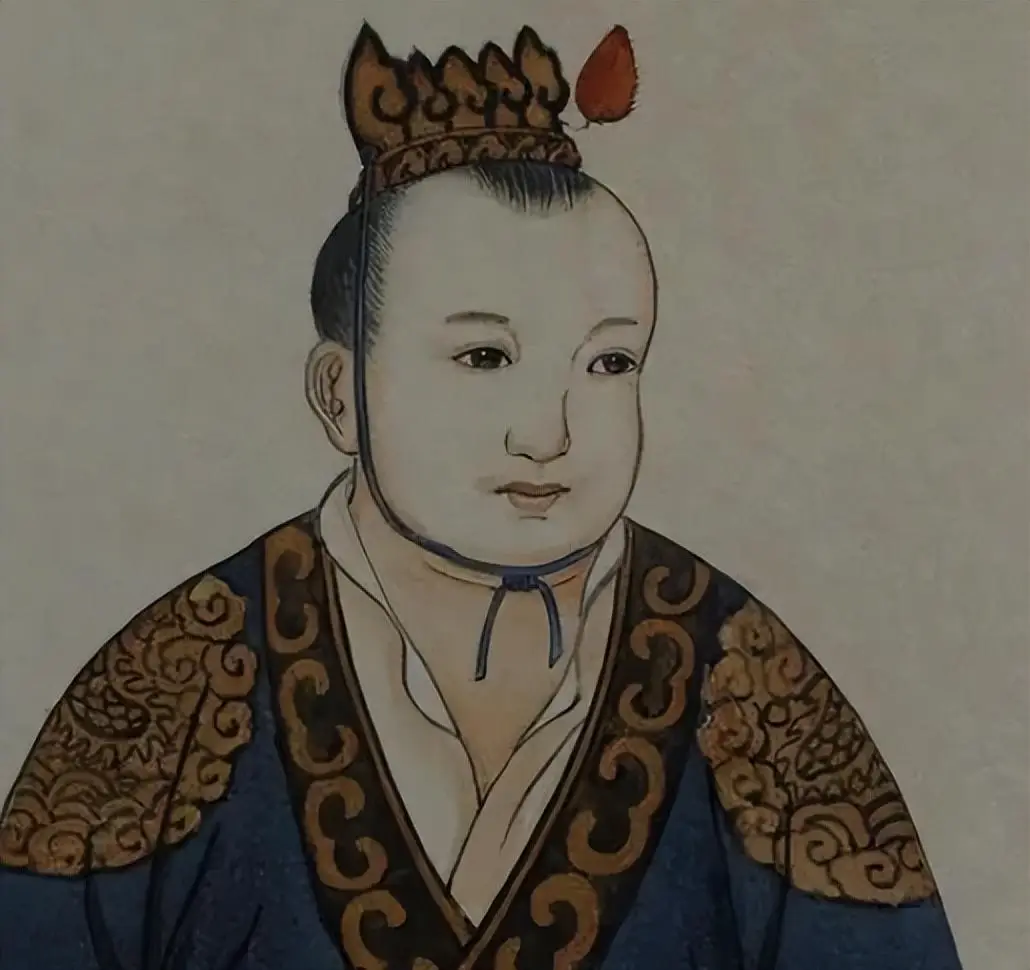
In the eighth month of 144 the emperor Shun died, and on the same day his only son was made emperor in his place. The boy was two years old. His mother was a consort of the Yu family whom his father had never raised to a title, and the woman who took the court in his name was his father's empress, Liang Na, who had borne no child of her own. His reign is counted at five months, and the era name it left behind lasted less than a week.
There is almost nothing else. He never issued a policy or chose a minister or spoke a sentence that anyone thought worth writing down, and the standard history disposes of him in four characters: young, dead, and unable to know what was done in his name. What the few entries preserve is not a reign but an arrangement. In the five months between his father's death and his own, the government of the empire passed wholly into the hands of a single family, and the terms on which it did so can be read here more clearly than anywhere else in the dynasty's last century.
1. The Only Son
Liu Bing was born in 143, in the second year of the era Han'an, the only son the record leaves to his father. His mother was a woman of the Yu family, taken into the palace from a good house and listed among the consorts at the rank of meiren, which the court did not count as a title. Shun never raised her, and no one afterward had any interest in raising her, so that the child came to the throne with a mother but without a mother's family.
That was the first fact of his reign. The second was the condition of the line. Shun had buried heirs before; his sons had died young, and the boy of 143 was the survivor. When the place of the crown prince was still empty the officials asked him to fill it, and in the fourth month of 144 he made the child his heir and changed the era name to Jiankang. Four months later, on a gengwu day of the eighth month, he died, and on the same day the boy, two years old, was lifted onto the throne.
The empress Liang was made empress dowager and took the court. She was the fourth of the six women who held the court for a child in the course of the Later Han, and by now the practice had worn smooth. Since the death of the emperor He in 106 the throne had come to minors more often than to grown men: an infant of a hundred days, a boy of thirteen, a boy of eleven. The palace announced that the sovereign was young, the government was conducted for him, and the offices were filled in the ordinary way. What was different in 144 was a matter of degree. The earlier minorities had left someone in the palace able to speak for the imperial house, a brother or a widow who had been the dead emperor's mother for years. This one left a woman who had borne no son and a boy of two, and beside them the family of that woman.
An emperor of two could do none of the things an emperor did. He could not hear a memorial, give an order, or be seen to decide; the dynasty had no council of regency and no regent with a term of office, only the standing practice by which a woman of the imperial house held the court until the sovereign was grown. Everything that made the throne a throne, the audience and the seal and the appointment of the officials, passed by default to whoever stood closest to the child. In 144 the closest was the empress dowager, and behind her the family that would do the governing.
2. The Dowager's Court
Within days the dowager filled the two posts a minority required. On a dingchou day of the same month the grand commandant Zhao Jun was moved up to grand tutor, and Li Gu, the chamberlain for agriculture, was made grand commandant and associated in the conduct of the secretariat, an office he was to hold jointly with the General-in-Chief. Li Gu was a man of Hanzhong who had spent the previous decade in and out of the court as one of the officials the palace could never quite put away, and the record of the regency shows him doing at last the work he had always wanted to do.
What he did first was clear the ground. The appointments of the last years of Shun's reign had been made out of order, many of them by special favor, and Li Gu memorialized against more than a hundred of them and had them removed. He then sent the eunuchs of the yellow gates out of the palace. The empress dowager supported him in both. The Book of the Later Han describes the regency of these months in a set of formulas it does not use often: the dowager worked early and late, gave her confidence to worthy men, employed Li Gu and others of his kind, and insisted on frugality; those who had prospered by greed or crime were for the most part removed or punished; troops were sent out against the disorders of the provinces. And it closes the passage with its phrase for a good year: within the seas all was quiet, and the ancestral temples were at peace. The summary covers the whole regency, which outlasted this emperor by five years; the quiet it praises belongs to his successor's time as much as to his.
The dowager's own reputation was of a different order from her brother's. The record gives her as a reader of history with a clear sense of what the women of former dynasties had done and what they had been punished for, and as a woman who took high place without the appetite that usually came with it: when an eclipse came she changed into plain dress and asked after her faults. As regent she kept that manner, and she was remembered for thrift and for her willingness to be advised.
The one open channel of the regency was the examination. In the ninth month of 144 the court, moved by earthquakes in the capital and in two commanderies of the north, called for men of worth and upright conduct to be recommended and questioned. The answer the history keeps is that of Huangfu Gui of Anding, a soldier-scholar of a frontier family who had spent the previous years sending the throne unsolicited memorials about the Qiang war and being ignored. His answer did not praise. It granted the regency its beginning, that it had raised up loyal and upright men and corrected much that was wrong so that near and far alike looked for peace, and then said that the signs in the sky had not stopped and the bandits had not stopped, and that the cause was the weight of one minister.
Huangfu Gui named what he meant. The regular attendants of the palace, he said, should be dismissed, beginning with the worst of them, and their goods taken from them; and the General-in-Chief and the governor of the capital should add to their modesty, govern themselves by the classics, give up their amusements, and cut down the ornament of their houses. Then he gave the figure that was remembered. The sovereign is a boat, the people are the water, the ministers are those who ride in the boat, and the brothers of the General-in-Chief are the men at the oars; if they pull together the crossing is safe, and if they slacken in midstream the boat goes under. Liang Ji read it and was enraged. He had Huangfu Gui ranked at the bottom of the list and given a minor post; Huangfu Gui pleaded illness and went home, and the officials of his province, taking their cue from the General-in-Chief, came near to destroying him more than once.
The answer is worth keeping for what it shows of the regency. The court had one institution through which a man outside office could speak to it, and when it was opened it produced a public indictment of the two people who ran the government. What came of the indictment was that its author lost his post. The corrections of Li Gu had been real, and they had run exactly as far as the empress dowager's willingness to overrule her brother.
3. The General's House
The office that Li Gu shared was the hinge of the arrangement. The General-in-Chief was the highest post a subject could hold, and in the Later Han it had become something more: once the consort families of the second century began to place their men in it, it came to stand above the three excellencies as the place from which a government was in fact run. Under Shun it had gone to Liang Na's father, Liang Shang, in 135, and on his death in 141 it had passed to his son Liang Ji. By the time the boy of 143 came to the throne the office had been in the same family for nine years, and the family's other men held the posts that mattered around it. Liang Ji's brother Liang Buyi was governor of the capital region, which put a Liang in command of the district that contained Luoyang itself, and the marriage connections ran the same way.
So the court of 144 had two poles. One was the dowager, who held the authority of the throne for a child and, by every sign the record gives, meant to use it well. The other was her brother, who held the office that had become the government. Between them stood the grand commandant, whose authority to correct and to memorialize was real but derived, and who could do nothing the dowager was not willing to make her brother accept. The portrait of Liang Ji that the histories carry, the arrogance and the appetite and the long list of men he broke, was drawn by writers who worked after his family had been destroyed, and it is not this account's business to decide how much of it belonged to the year 144. What the year itself shows is simpler. The regency worked while the two poles agreed, and it would stop working the moment they did not.
4. The Jade Hall
The emperor sickened, and before he was dead the General-in-Chief had already sent men to bring a boy of the imperial clan, Liu Zuan, the eight-year-old son of the prince of Le'an, to the capital, and had lodged him at a post station outside the walls, so that the succession would not have to be improvised. It was the one act of foresight recorded in the reign, and it was not the emperor's.
On a wuxu day of the first month of 145, in the front hall of the Jade Hall, the child died. He was three years old by the count of the court. The record gives no cause and no detail beyond the hall, and its brevity is the verdict: the standard history's four characters for him mean that he died young and never understood what was done in his name.
His era name had a history of its own. He had changed it at the new year, when the court proclaimed Yongjia, and he died within the same week, so that the one year bearing his reign is mostly the year of the men who came after him. Even its name is not certain. The received reading in the standard history is Yongjia, but the edition now in use prints Yongxi, on the authority of a stone inscription dug up at a temple in Sichuan in 1175 and a single passage in another chapter, while the other early history gives Yuanjia. For an emperor with nothing else to his name, the record cannot even fix the name of his one year.
The death was not announced at once. The empress dowager, with the southeast in the hands of bandits, wanted it kept quiet until the princes she had summoned arrived, so that the court could settle the succession before the news could unsettle the provinces. Li Gu stopped her. The emperor, he said, was a child, but he was still the father of the empire, and when a father dies a son does not hide the death. He held up the precedents: the First Emperor, whose death at Shaqiu was concealed while the succession was rewritten, and the concealment at the death of the Marquis of Beixiang, which had brought troops into the palace. The dowager gave way, and mourning was proclaimed that evening.
5. Huailing and the Child of Eight
The tomb was arranged by Li Gu also. The empire was in revolt and the armies were expensive; the tomb of Shun had only lately been built, and the levies for it were still being collected. Li Gu proposed that the child be buried inside the precinct of his father's tomb, on the model of the small tomb made for the infant Shang, with the labor and the cost cut by a third. The court agreed, and Liu Bing was buried within the month in Huailing, a reduced grave inside his father's grounds. It is the shape of the reign in stone: an emperor whose only monument is a smaller tomb, built inside another man's.
Then came the succession. Two men of the imperial line had been brought to the capital, and the choice between them was the whole quarrel: a grown prince of Qinghe, grave and correct, to whom the officials inclined, and the child of eight whose father held Le'an. Liang Ji wanted a young sovereign, the record says, because a young sovereign would leave the government where it was; and he and his sister settled the matter inside the palace. Within a day the throne had changed hands, and the men who had argued against the choice had not yet begun to pay for it.
So the line was handed on. The prince of Qinghe went back to his fief, and Li Gu went on as grand commandant, and the brothers of the General-in-Chief went on as they had been. The dynasty had been brought to this choice before, between a grown man of the imperial house and a boy, and it had answered it the same way: the boy of thirteen in 106, the boy of eight now. The officials wanted an emperor who could govern. The man who governed wanted one who could not. Liu Bing had reigned five months and done nothing, because there was nothing he could do. What his reign contains is the forming of a structure that would outlast him. An empress dowager held the court; a General-in-Chief held the government from an office set above the three excellencies; and the succession was decided by that office rather than by the throne. Every part of it was in place before the child was three years old, and no part of it was his doing. The history's judgment on him, that he died young and understood nothing, is exactly right, and it is also the point. In the Later Han of the second century the emperor's understanding was not a qualification for the office, and the office no longer required an emperor who could fill it.